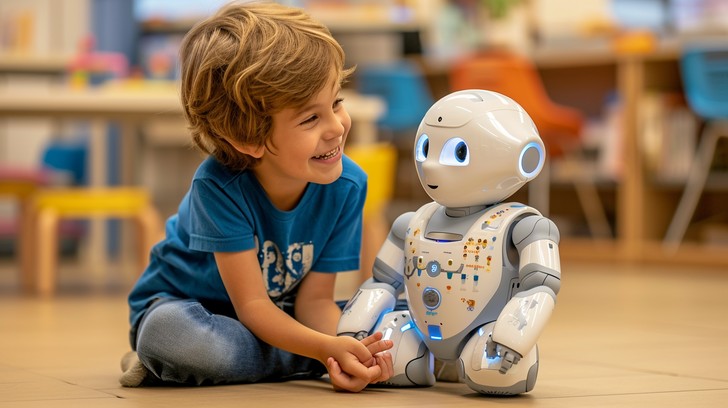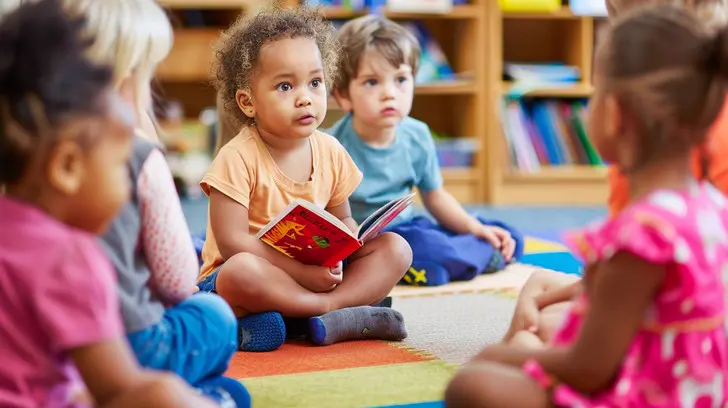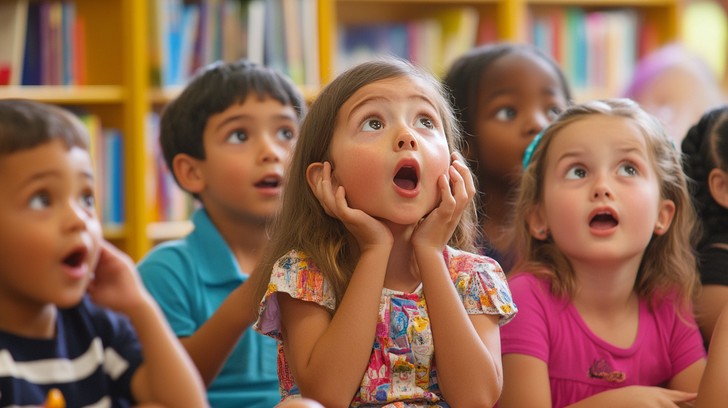
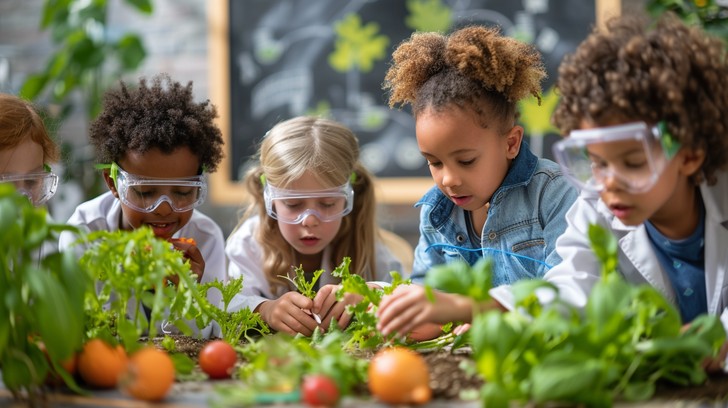
When many adults hear the word “play,” they often think of fun and entertainment. While play certainly brings joy, it is also one of the most powerful ways young children learn. Play-Based Learning for Preschool Children allows children to develop academically, socially, emotionally, and physically while exploring the world around them in ways that feel natural and exciting.
Research consistently shows that young children learn best through hands-on experiences rather than passive instruction. Through purposeful play, preschoolers develop language, mathematics, science, creativity, collaboration, and critical thinking skills that prepare them for kindergarten and beyond.
At Brooklyn Preschool of Science, play is never “just play.” Every activity is thoughtfully designed to spark curiosity while building the foundational skills children need for lifelong success. Families can learn more about our Infant/Toddler, Twos, Threes & Fours, and Summer Camp programs by visiting https://brooklynpreschoolofscience.com.
Play-Based Learning for Preschool Children is an educational approach that combines structured learning goals with child-led exploration.
Instead of sitting through long lessons, children learn by:
Teachers carefully guide these experiences, asking questions and introducing new ideas that help children think more deeply while still allowing them to explore independently.
According to the National Association for the Education of Young Children (NAEYC), meaningful play supports healthy brain development and helps children build essential academic and social skills.
https://www.naeyc.org
One of the greatest benefits of Play-Based Learning for Preschool Children is that it teaches children how to think rather than what to think.
When children build a tower that falls over, they naturally begin asking questions:
Without realizing it, they’re learning engineering, problem-solving, and resilience.
These experiences closely mirror the inquiry-based learning that defines a high-quality STEM education.
Children learn language through interaction.
Whether they are pretending to run a grocery store, building with classmates, or explaining the results of a science experiment, children constantly practice:
These everyday conversations strengthen vocabulary and communication skills that later support reading and writing.
Academic success is important, but preschool is also where children begin learning how to interact with others.
During cooperative play, children practice:
These social-emotional skills become just as valuable as early literacy and math instruction.
The Centers for Disease Control and Prevention (CDC) highlights the importance of social and emotional development during the preschool years.
https://www.cdc.gov/child-development
Creativity flourishes when children are encouraged to imagine, invent, and explore.
Whether they are designing a bridge from blocks, painting a picture, or pretending to travel into space, children learn there are many ways to solve a problem.
Creativity developed during preschool often becomes the foundation for innovation later in life.
At Brooklyn Preschool of Science, creativity is woven into our STEM activities, helping children combine imagination with discovery.
Many parents are surprised to learn that STEM education and play-based learning naturally complement one another.
A typical day may include:
This combination of exploration and instruction helps children remain engaged while developing essential STEM skills.
Families interested in our STEM-focused classrooms can explore our Threes & Fours Program:
https://brooklynpreschoolofscience.com/threes-fours/
Every time a child chooses an activity, solves a problem independently, or makes a decision during play, they become more confident.
Purposeful play encourages children to:
Confidence gained during preschool often carries into elementary school and beyond.
A high-quality preschool balances fun with intentional learning.
Play-Based Learning for Preschool Children helps prepare children for kindergarten by developing:
Children often enter kindergarten feeling excited, capable, and ready to learn.
The Harvard University Center on the Developing Child explains how early experiences shape brain development and future learning.
https://developingchild.harvard.edu
The preschool years are filled with opportunities to inspire curiosity and confidence.
Through Play-Based Learning for Preschool Children, children develop the academic, social, emotional, and creative skills they’ll use for the rest of their lives.
At Brooklyn Preschool of Science, every block built, every experiment completed, every question asked, and every discovery made helps shape confident learners who are excited about the world around them.
Learn more about our school and schedule a visit at:
https://brooklynpreschoolofscience.com
Play-based learning is an educational approach that uses purposeful play to teach academic, social, emotional, and problem-solving skills through hands-on experiences.
Yes. Research shows that children who learn through play develop stronger communication, creativity, critical thinking, and social skills while remaining highly engaged in the learning process.
Play naturally introduces children to scientific observation, engineering, mathematics, and technology through building, experimenting, measuring, and exploring.
Brooklyn Preschool of Science combines purposeful play with structured early childhood education and hands-on STEM learning to provide a balanced educational experience.

CEO, Brooklyn School of Science