Choosing the right preschool is about more than finding a classroom close to home. For families looking for a science preschool in Park Slope, Brooklyn, early childhood education is an opportunity to build curiosity, confidence, creativity, and a lifelong enthusiasm for learning through hands-on discovery.
At Brooklyn Preschool of Science, we believe children learn best when they’re encouraged to explore the world around them. Our hands-on, science-inspired approach combines discovery, experimentation, imaginative play, and age-appropriate STEAM activities to make learning both meaningful and exciting.
For parents exploring a science preschool in Park Slope, understanding how learning through play supports early development can make choosing the right educational environment much easier.
Young children are naturally curious. They ask questions, investigate unfamiliar objects, observe changes, and experiment with their surroundings.
Science-based preschool education builds on that natural curiosity.
Rather than relying exclusively on traditional classroom instruction, children participate in interactive experiences that encourage them to investigate, predict, observe, and discover.
These experiences help develop important early learning skills, including:
Critical thinking: Learning to ask questions and explore possible answers.
Problem-solving: Experimenting with different approaches to everyday challenges.
Communication: Describing observations, sharing discoveries, and expressing ideas.
Creativity: Using imagination to explore new possibilities.
Confidence: Becoming comfortable trying new things and learning from mistakes.
When these skills are introduced through age-appropriate activities, children begin developing a foundation that supports future academic and personal growth.
Simple experiments introduce children to observation, prediction, and cause and effect.
Activities might include exploring which objects float or sink, observing how colors mix, investigating magnets, or discovering what plants need to grow.
Children learn that asking questions and testing ideas are important parts of discovery.
Technology in preschool extends beyond computers and tablets.
Age-appropriate tools, building materials, and interactive learning activities can help children understand how everyday objects work and how tools help people solve problems.
Building towers, designing structures with blocks, and creating simple constructions encourage early engineering thinking.
When a tower falls, children have an opportunity to investigate why and try a different approach.
These activities help develop persistence, spatial awareness, and creative problem-solving.
Art plays an important role in STEAM education.
Painting, drawing, sculpting, and experimenting with different materials allow children to express ideas while developing fine motor skills and imagination.
Art also helps children connect creativity with scientific exploration.
Early math concepts can be introduced through sorting, counting, comparing sizes, recognizing patterns, and measuring objects.
These activities make mathematics approachable and relevant to children’s everyday experiences.
One of the greatest benefits of hands-on learning is that children become active participants in their education.
Instead of simply listening to explanations, they are encouraged to investigate ideas for themselves.
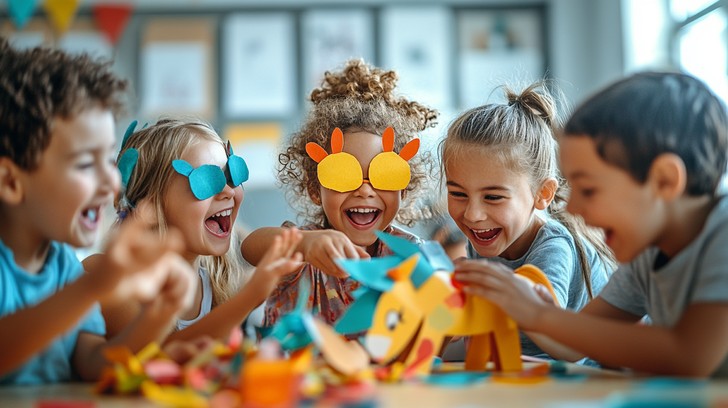
Imagine a group of preschoolers experimenting with different materials to build a bridge.
Some children may focus on making the bridge taller. Others may test how much weight it can support. Another group might discover that changing the shape of the structure makes it stronger.
Throughout the experience, children practice teamwork, communication, patience, and problem-solving.
Even when an experiment doesn’t work as expected, the learning continues.
Children discover that making mistakes is a natural part of exploration and that trying again can lead to new discoveries.
These experiences help build confidence that extends beyond the classroom.
Play is an essential part of early childhood education.
Through play, young children develop social, emotional, cognitive, and physical skills that prepare them for future learning.
A thoughtfully designed preschool environment provides opportunities for both guided activities and independent exploration.
Collaborative activities encourage children to share materials, take turns, communicate with classmates, and work toward common goals.
These experiences help develop empathy, cooperation, and emotional awareness.
Science activities naturally encourage conversation.
Children describe what they see, explain their ideas, ask questions, and learn new vocabulary.
Teachers can support language development by encouraging discussion and introducing words connected to each activity.
Pouring water, handling small objects, using art materials, and building structures help strengthen coordination and fine motor skills.
Movement-based exploration also supports physical development.
When children are encouraged to make choices and investigate independently, they develop greater confidence in their abilities.
These early experiences support independence, responsibility, and a willingness to approach unfamiliar challenges.
Families searching for early childhood education in Park Slope often want a preschool that balances academic preparation with a nurturing, engaging environment.
A science-inspired approach offers that balance by introducing important learning concepts through experiences that feel natural and enjoyable to young children.
Brooklyn Preschool of Science combines hands-on discovery, creative activities, guided exploration, and opportunities for social development within its early childhood curriculum.
Our Park Slope location serves families in Park Slope and nearby Brooklyn neighborhoods, including South Slope, Prospect Heights, Gowanus, and Windsor Terrace.
Parents interested in learning more about our educational approach can explore our preschool in Park Slope to discover our location, curriculum, and learning environment.
Not every preschool that mentions STEM or STEAM uses the same educational approach.
When evaluating a science-focused preschool, parents should consider how learning experiences are incorporated into everyday classroom activities.
Important questions include:
Are children encouraged to ask questions and explore their own ideas?
Does the curriculum include hands-on experiments and discovery activities?
Are science and math concepts introduced in age-appropriate ways?
Do teachers encourage creativity, collaboration, and independent thinking?
Is there a healthy balance between structured learning and imaginative play?
Does the classroom environment feel welcoming, safe, and engaging?
A school visit can help parents see how these principles are applied in practice.
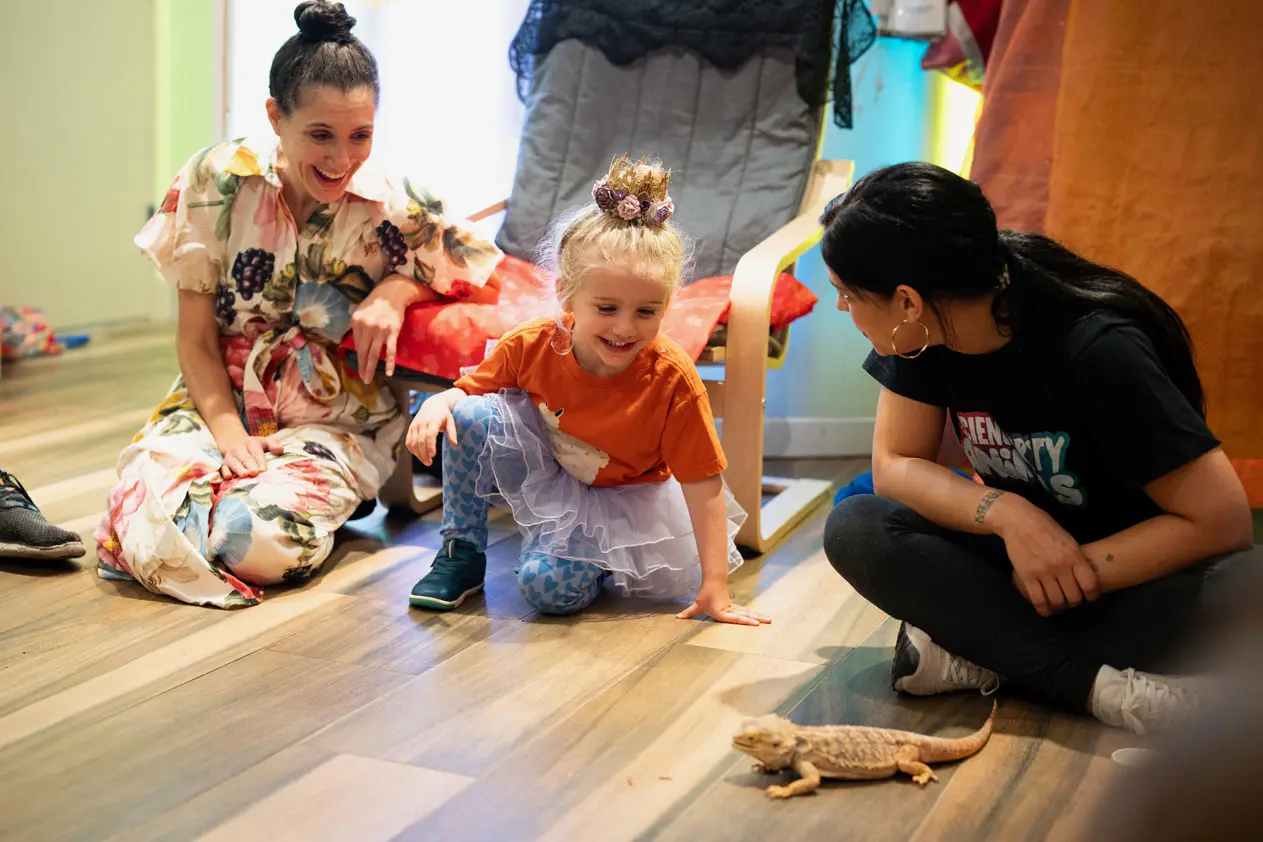
Watching children interact with teachers, explore materials, and participate in activities often provides a clearer understanding of the school’s educational philosophy than a curriculum description alone.
At Brooklyn Preschool of Science, curiosity is at the heart of early childhood education.
Our goal is to create a learning environment where children feel encouraged to explore, experiment, ask questions, and discover new ideas.
By combining science-inspired activities with creative play and nurturing guidance, we help young learners develop confidence, communication skills, and an enthusiasm for discovery.
For families considering a science preschool in Park Slope, visiting the classroom is an excellent way to experience how hands-on learning comes to life.
Schedule a tour of Brooklyn Preschool of Science’s Park Slope location and discover an engaging early childhood environment designed to inspire young minds.
A science-based preschool introduces young children to scientific thinking through hands-on experiments, observation, discovery, and play. Rather than emphasizing memorization, children are encouraged to ask questions, explore ideas, and develop problem-solving skills through age-appropriate learning experiences.
STEAM education combines science, technology, engineering, art, and mathematics to encourage curiosity, creativity, collaboration, and critical thinking. Through activities such as building structures, experimenting with materials, sorting objects, and exploring patterns, preschoolers develop foundational skills while having fun.
Yes. Science-based learning can be adapted to different developmental stages. Younger children may explore textures, colors, sounds, and sensory materials, while older preschoolers can participate in simple experiments, building challenges, and guided investigations. Activities should always be age-appropriate and supervised.
Parents can schedule a tour of Brooklyn Preschool of Science's Park Slope location to learn about its science-inspired curriculum, classroom environment, and hands-on learning opportunities. Visiting the school allows families to ask questions and better understand how exploration and play are incorporated into early childhood education.

CEO, Brooklyn Preschool of Science