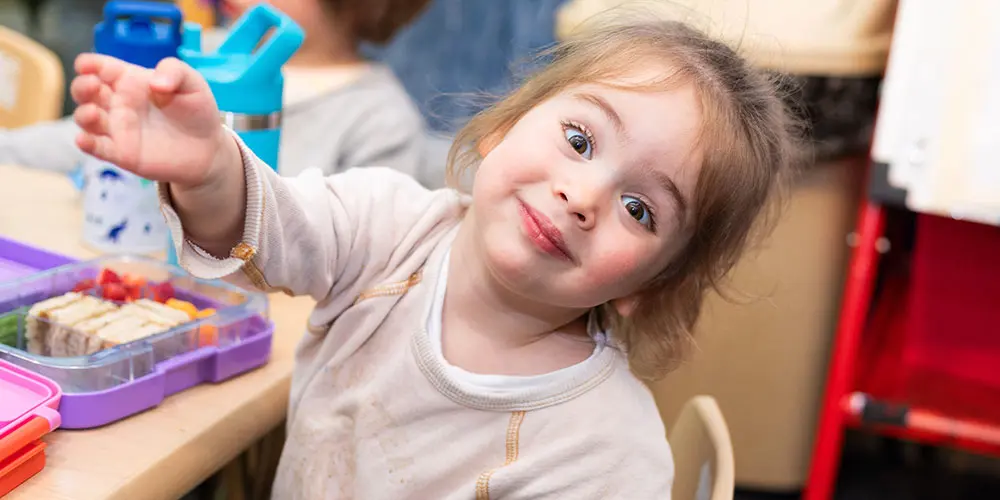
Pre kindergarten centers Brooklyn are more than just places for young children to socialize. These are the critical stages for brain development, laying the foundation for lifelong learning and success. Early childhood programs, including preschool and prekindergarten schools, help children develop essential cognitive, social, emotional, and motor skills.
At Brooklyn Preschool of Science, we focus on a science-based preschool education program NY that combines inquiry, exploration, and hands-on learning. Our programs are designed to prepare children for kindergarten and beyond, fostering curiosity and critical thinking.
According to the National Institute for Early Education Research (NIEER), children attending high-quality preschool programs are more likely to succeed academically and socially in later years. This aligns with our mission to provide an enriching environment that supports early development in Brooklyn, NY. Families searching for quality preschool education Brooklyn can rely on our science-focused programs to nurture early learning.
Preschool education refers to educational programs for children generally aged 3 to 5 years old, focusing on early learning goals such as language, literacy, numeracy, and social skills. It differs significantly from daycare, which primarily provides child supervision and care.
Parents looking for trusted pre school programs Brooklyn can explore our specialized science-based curriculum designed to inspire young learners.
At Brooklyn Preschool of Science, our preschool programs are carefully crafted to enhance early childhood education with a focus on STEM and science exploration.
Pre kindergarten centers Brooklyn provide a bridge between preschool and kindergarten, emphasizing readiness through a more structured curriculum. These programs promote:
Brooklyn Preschool of Science’s prekindergarten curriculum integrates science experiments and inquiry-based learning, making it one of the most effective pre-K schools in Brooklyn, NY.
For families seeking structured prekindergarten schools Brooklyn, our programs provide the perfect balance of academics and exploration.
We are also recognized among the top pre kindergarten schools Brooklyn for our focus on science and early childhood readiness.
Parents today have many options when selecting pre kindergarten centers Brooklyn. Popular approaches include:
Our science preschool programs provide children with engaging, age-appropriate activities that stimulate their natural curiosity and prepare them for future academic success.
Many parents recommend our innovative pre school programs Brooklyn because of our unique science-based learning approach.
There are many pre kindergarten centers Brooklyn. But, choosing the right preschool or pre-K program is a crucial decision. Here’s what to consider:
Brooklyn Preschool of Science offers tours and detailed program information to help families make informed choices.
“The hands-on science activities have made my child excited about learning. We’ve seen remarkable growth in confidence and skills.” — Sarah K., Brooklyn
“The teachers truly care and create a warm, supportive environment. My child’s social skills and curiosity have flourished.” — Michael T., Brooklyn
For enrollment details, campus tours, and more information, visit our Contact page.
Is Your Child Ready for Prekindergarten Schools? 7 Signs to Look For
7 Surprising Benefits of Preschool You Probably Haven’t Heard Before
Preschool focuses on general early learning for ages 3–5, while pre kindergarten centers Brooklyn have more structured program preparing 4–5-year-olds specifically for kindergarten readiness.
Most children begin between ages 3 and 4, depending on their developmental readiness and family preferences.
Typically, pre-K programs last one academic year, with both full-day and part-day options available.
No, preschool is generally optional, but many families choose it to help children develop social, emotional, and academic skills. Some states do offer publicly funded pre-K programs.
They encourage critical thinking, curiosity, and early STEM development through hands-on, inquiry-driven learning experiences.
Early learning is a broader term that includes any structured education before kindergarten, while preschool typically refers to programs for children aged 3–5 that focus on school readiness.
Preschool typically includes children aged 3 to 5, while early childhood spans from birth to age 8.
Many 3-year-olds attend preschool 2–3 days per week, but schedules vary based on the child’s needs and the school’s offerings.

CEO, Brooklyn School of Science
Preschool education provides a critical foundation for early childhood development, helping young children build essential cognitive, social, emotional, and motor skills. Enrolling your child in a quality program ensures they develop a lifelong love for learning through structured play and guided exploration.
At the Brooklyn Preschool of Science, our inquiry-based curriculum integrates hands-on STEM activities, experiments, and expert educators to stimulate natural curiosity. Serving families across Brooklyn, we prepare children aged 3 to 5 for kindergarten success by fostering critical thinking and collaborative social interactions in a safe, nurturing environment.